
Queen Anne's County Arrest Records and Charges
Arrest records in Queen Anne's County begin on the law-enforcement side. The Sheriff's Office keeps public-information request channels for police reports, body camera footage, and other official documents, while the Detention Center handles custody questions after a person is booked. Those records can be tied to a court case, but they are not the same as the court charge record.
Charges after arrest are tracked in Maryland court systems. Queen Anne's County criminal matters may start through a District Court Commissioner, District Court, or later Circuit Court filing depending on the offense and stage. The charge record can show the alleged offense, charge code or statute when public, filing date, defendant, bond conditions, and next court date. The full plea, motion history, verdict, sentence, or dismissal belongs in the Queen Anne's County criminal court record.
The Sheriff's public-information request page is the source for asking for official Sheriff's documents related to an arrest.
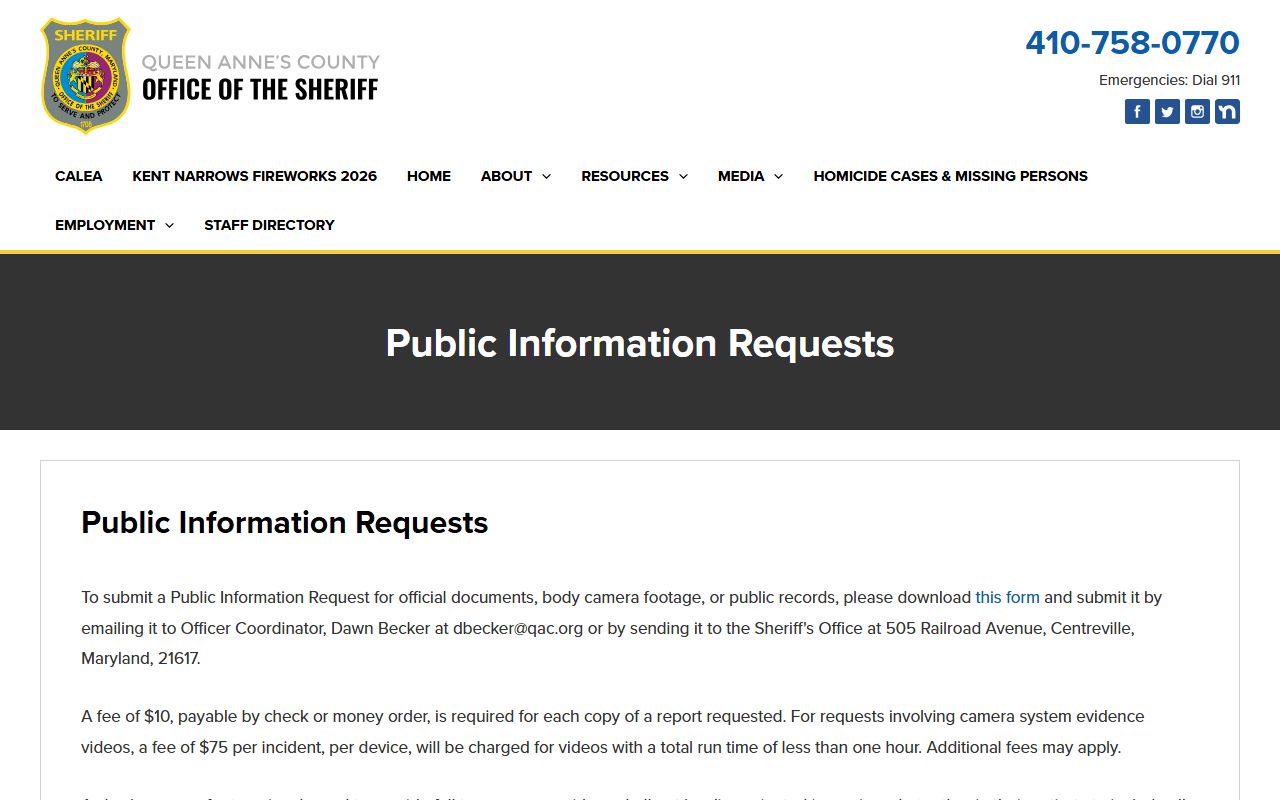
That request route matters when the question is about the police report or body-camera record rather than the charges filed in court.
Find Queen Anne's County Arrest Records
A complete Queen Anne's County arrest records search uses more than one channel because custody, police records, and court charges sit in different systems. Maryland Judiciary Case Search is the public starting point for filed District Court and Circuit Court charge information. Sheriff's records are requested through the Sheriff's PIA form route. Current custody is checked through the Detention Center, the Sheriff and DES app, Maryland VINE, or DPSCS depending on where the person is held.
- Search Maryland Judiciary Case Search by name or case number for filed criminal charges, court dates, dispositions, and warrant or failure-to-appear events when public.
- If the arrest is recent and custody is the concern, use the official inmate channels and Detention Center phone route listed on the Queen Anne's County inmate records page.
- For police reports, body camera footage, or Sheriff's Office documents, download and submit the Sheriff's public-information request form by email or mail.
- If the charge is tied to a missed court date or warrant, check the Sheriff's Most Wanted list, Case Search, and the court where the case is pending.
The Sheriff's FAQ and general information page repeats that police report and body-camera requests may be submitted to the office or by email to the records coordinator.
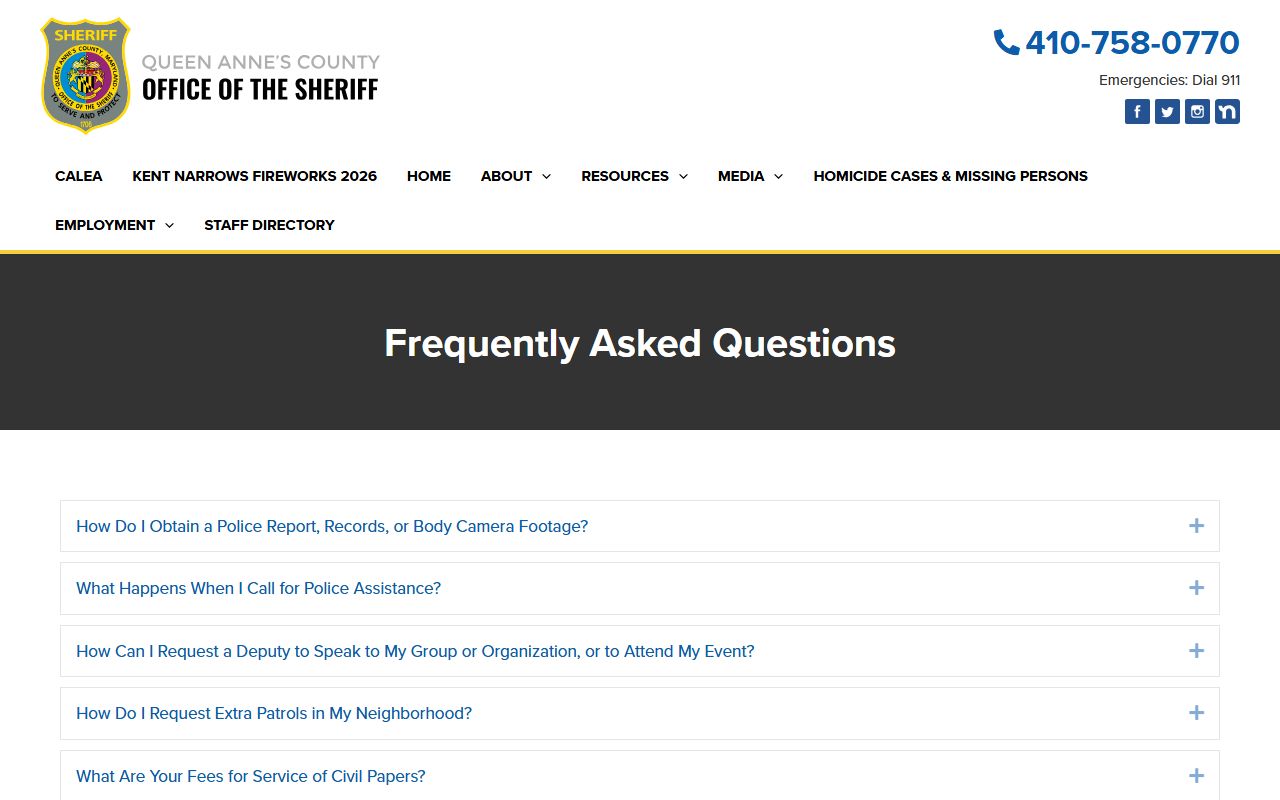
The FAQ supports the fallback route when an online court search does not answer a police-record question.
Note: Case Search can show filed charges, but it is not a live jail roster or a complete police report repository.
Queen Anne's County Charges After Arrest
Maryland charging can begin at the District Court Commissioner level after arrest or after an application for statement of charges. The Queen Anne's Commissioner station is tied to charging documents, warrants, and initial criminal process. A prosecutor may later file or amend charges, and serious felony matters can move into Circuit Court for trial-level proceedings.
| Document | Who Uses It | What It Starts | Queen Anne's County Context |
|---|---|---|---|
| Complaint or statement of charges | Law enforcement, complainant, commissioner, or prosecutor process | Front-end District Court criminal process | Often connected to arrest, bond, commissioner review, or a first court date. |
| Information | State's Attorney | Prosecutor-filed criminal charge | Used when the State's Attorney proceeds by formal filed charge rather than grand jury indictment. |
| Indictment | Grand jury through prosecution | Formal felony charge | Serious felony matters may proceed in Circuit Court after indictment. |
The Queen Anne's County State's Attorney prosecutes criminal charges and is the local office connected with plea offers, victim or witness communication, and charging decisions after police or commissioner action. Copies of filed public court records still come from the court or clerk, not from the prosecutor by default.
The State's Attorney homepage identifies the local prosecution office for Queen Anne's County criminal charges.

The prosecutor source helps separate charging decisions from the court clerk's role as custodian of filed case records.
Queen Anne's County Charge Status
A charge can change after the first filing. One arrest may lead to several separate counts, and each count can have a different status. Maryland court records may use terms such as dismissed, nolle prosequi, stet, probation before judgment, guilty, not guilty, open, closed, or disposed. The status must be read charge by charge.
| Status | What It Means | Record Caution |
|---|---|---|
| Pending | The charge is still active or awaiting a later court event. | Do not treat a pending charge as an outcome. |
| Amended or reduced | The State changed the charge, severity, or count. | Read the docket history to see the original and current wording. |
| Dismissed | The court dismissed the charge or it did not proceed. | A dismissal may still appear unless expunged or sealed. |
| Nolle prosequi | The State chose not to prosecute that charge. | It is not the same as a conviction. |
| Stet | The charge is placed on an inactive docket under Maryland practice. | It may have conditions and may not be a final clean outcome. |
The State's Attorney contact page shows the official form fields for contacting the prosecution office.
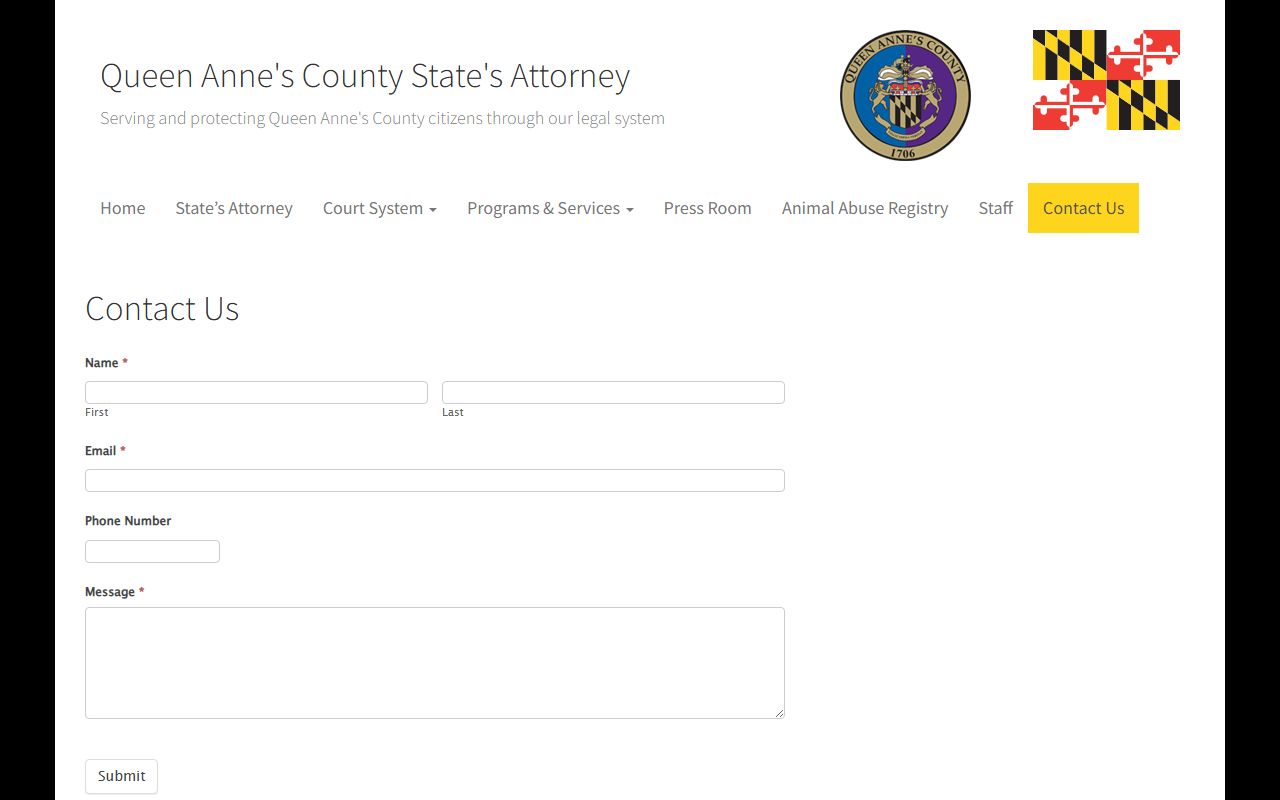
The form is useful for parties, victims, or witnesses, while public copies of filed case documents still route through the proper court office.
Charges vs Convictions
Being charged is not the same as being convicted. A Queen Anne's County charge record is an accusation filed into the criminal process. A conviction appears only after a guilty plea, guilty finding, or verdict that supports judgment. Maryland records may also show acquittal, dismissal, nolle prosequi, stet, or probation before judgment, so the final disposition must be read with care.
| Point | Charge | Conviction |
|---|---|---|
| Stage | Filed allegation after arrest, citation, commissioner action, information, or indictment. | Outcome after plea, trial, or finding of guilt. |
| What it proves | That a charge was filed and pending or resolved in court. | That the court entered a guilty finding or accepted a guilty plea. |
| Where to verify | Case Search, court docket, clerk copy, or court counter. | Disposition and sentencing entries in the criminal court file. |
Important: Filed charges, arrests, dismissed counts, and warrants cannot be used for FCRA-regulated screening through a public-record lookup.
Defense Help After Charges
People facing court charges after arrest may need legal help before speaking with the State's Attorney, appearing in court, or addressing bond and warrant issues. The Maryland Office of the Public Defender represents eligible people in criminal, juvenile, parental defense, and involuntary commitment matters. It is not a public record office and does not provide open copies of court files.
The Queen Anne's County Public Defender page lists the local OPD office for eligible defense services.
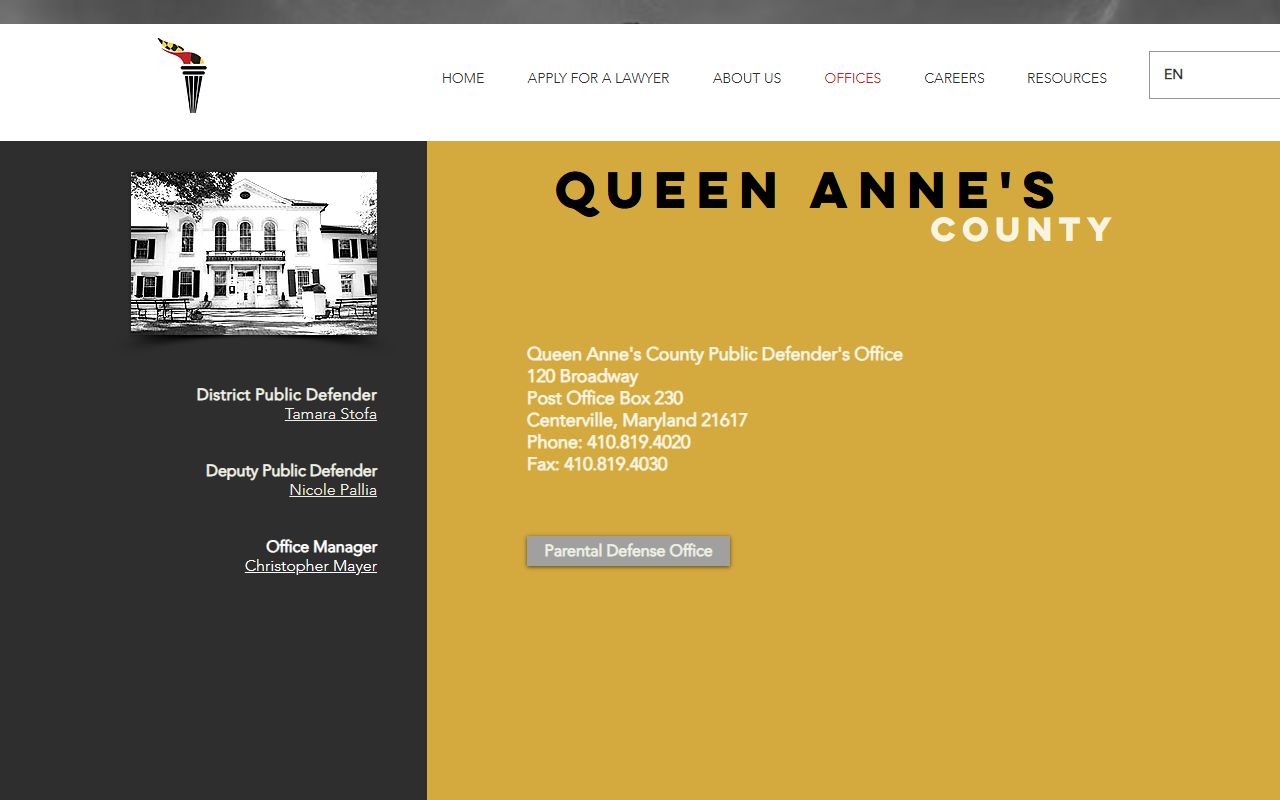
That distinction is important: counsel can help a defendant respond to charges, while public access to filed records is handled through court-record channels.
Queen Anne's County Public Charge Access
Public access to Maryland court charges starts with judicial-record rules, especially Maryland Rules 16-901 through 16-914. Court records are generally open unless a rule, statute, sealing order, expungement, or confidentiality law restricts access. For court-filed charge records, use Case Search, JPortal where applicable, the Clerk of the Circuit Court, District Court, or the court where the case was filed.
Law-enforcement records use a different path. The Maryland Public Information Act applies to state and local agency records outside direct court-record rules, including Sheriff's records. Queen Anne's County Sheriff's requests for official documents, body camera footage, and public records route to Officer Coordinator Dawn Becker by email at dbecker@qac.org or by mail to the Sheriff's Office.
- Charging document
- The paper or electronic filing that accuses a person of a criminal offense.
- Disposition
- The current or final result of a charge, such as dismissed, guilty, nolle prosequi, or stet.
- Bond
- Money or release conditions meant to secure a person's return to court.
- Bench warrant
- A judge-issued warrant, often linked to failure to appear or failure to comply.
Restricted Queen Anne's County Charge Records
Not every arrest, charge, or warrant-related record is public. Juvenile police and court records are confidential under Courts and Judicial Proceedings section 3-8A-27. The Queen Anne's Clerk's record guidance also treats juvenile and adoption case records as accessible only by court order. Expunged, shielded, and sealed records are not ordinary public lookup material.
Adult criminal records may qualify for expungement under Criminal Procedure section 10-105 or automatic expungement under section 10-105.1 if the case meets Maryland's rules. Search warrants, active investigative records, sealed warrants, and certain mental health details may also be restricted. If a case disappears from public search, it may be sealed, expunged, shielded, confidential, misindexed, or held by another office.
| Limit | What It Means | Where to Ask |
|---|---|---|
| Expunged | Eligible police and court records are removed from ordinary public access. | The court where the case was handled. |
| Shielded or sealed | Public view is limited by rule, statute, or court order. | The clerk or court that controls the file. |
| Juvenile | Police and court records are confidential except as law allows. | Court order or authorized party route. |
| Sheriff investigative record | Some law-enforcement material may be withheld or redacted. | Sheriff PIA request process. |
Note: A charge record may remain visible after a non-conviction unless Maryland expungement, shielding, or sealing rules remove it from public access.